

Rolex Day-Date Platinum
Shop Rolex Day-Date platinum watches for sale in 36mm, 40mm, and the discontinued 41mm, cased in 950 platinum and produced in far smaller numbers than the gold references. Platinum is the only metal Rolex pairs with its ice blue dial, and the range extends to meteorite, lapis, and factory diamond configurations on fluted, smooth, and gem-set bezels. Prices typically range from $40,000 to $140,000+. Each platinum Day-Date is authenticated by our watchmakers and carries the WatchGuys 2 Year Warranty. Insured overnight shipping and WatchGuys Buyer Protection are included.
Some filters could not be applied and were reset.
-
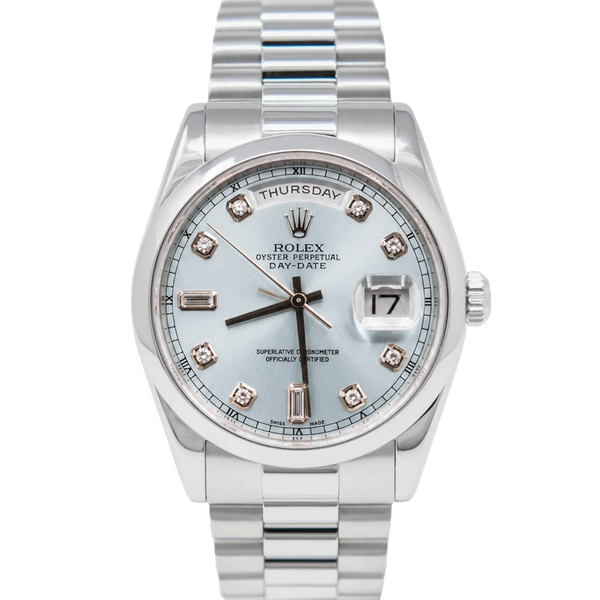 Rolex Day-Date 118206 Platinum Ice Blue Diamond $36,995.00
-
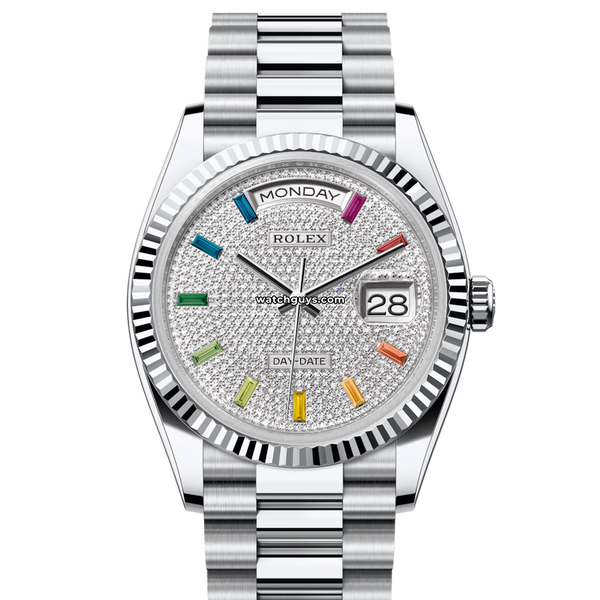 Rolex Day-Date 128236 Platinum Diamond Paved President $98,995.00
-
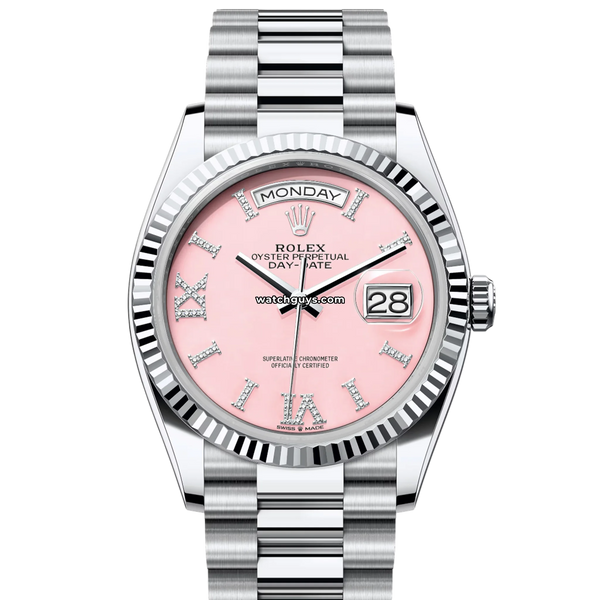 Rolex Day-Date 128236 Platinum Pink Roman Diamond President $76,495.00
-
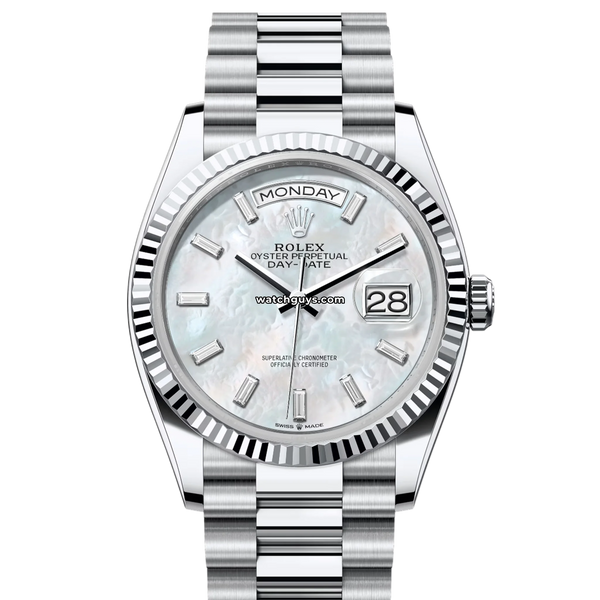 Rolex Day-Date 128236 Platinum Mother of Pearl Baguette Diamond President $88,795.00
-
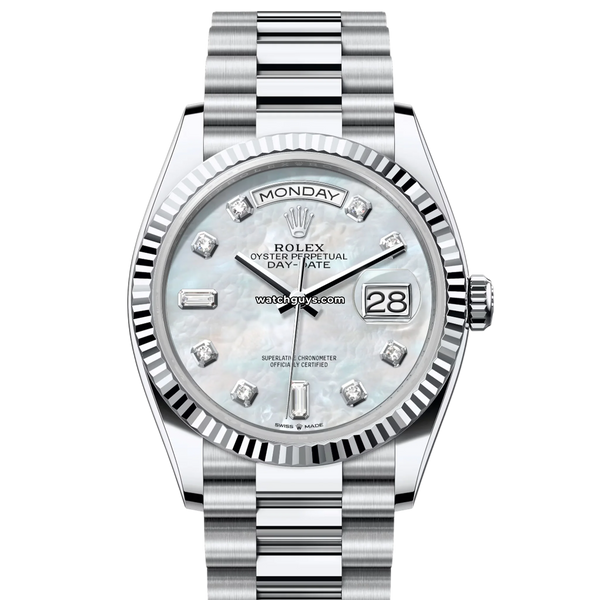 Rolex Day-Date 128236 Platinum Mother of Pearl Diamond President $88,795.00
-
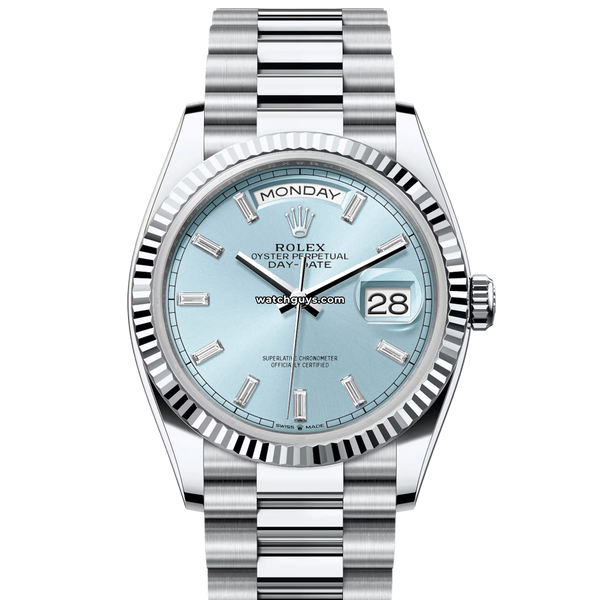 Rolex Day-Date 128236 Platinum Ice Blue Diamond President $81,595.00
-
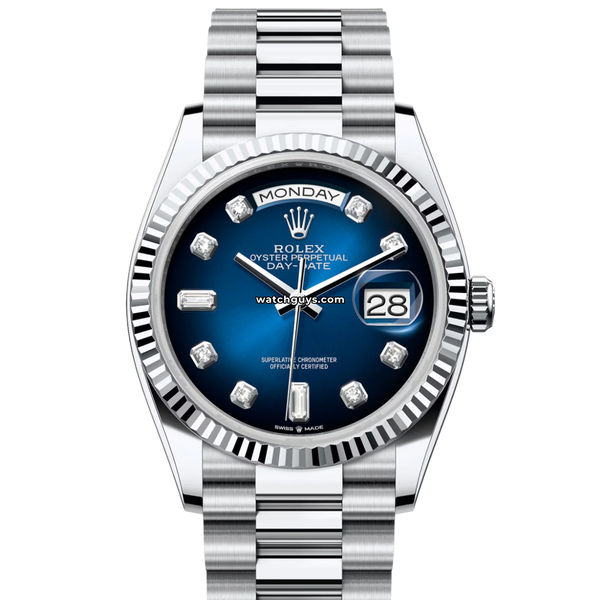 Rolex Day-Date 128236 Platinum Blue Ombre Diamond President $96,895.00
-
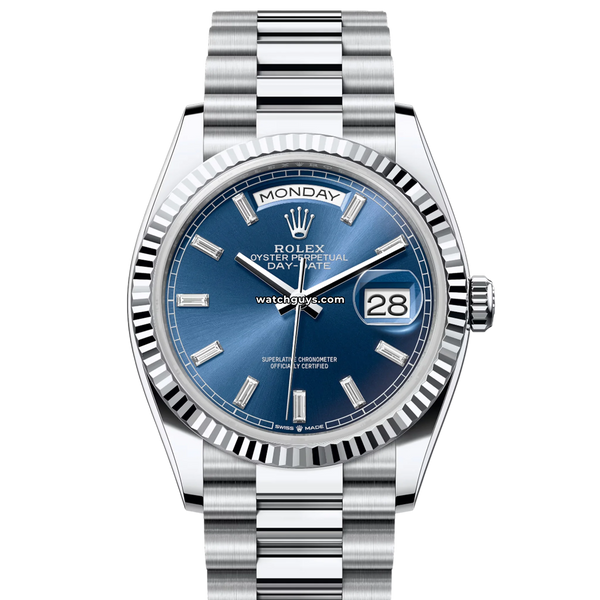 Rolex Day-Date 128236 Platinum Blue Diamond President $85,595.00
-
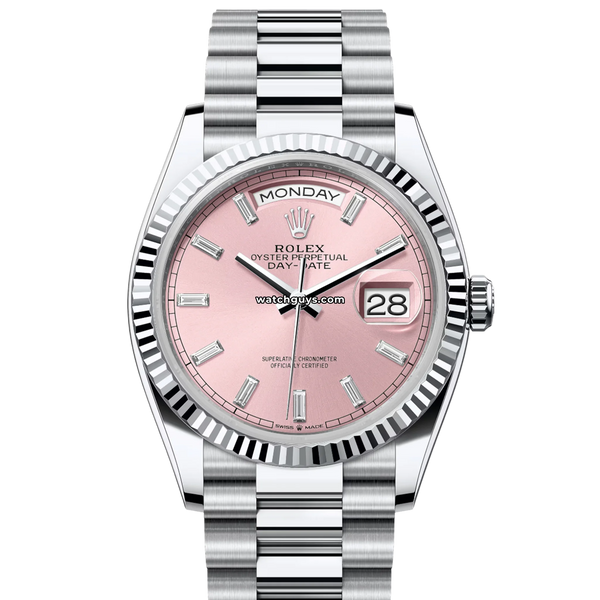 Rolex Day-Date 128236 Platinum Pink Diamond President $86,295.00
-
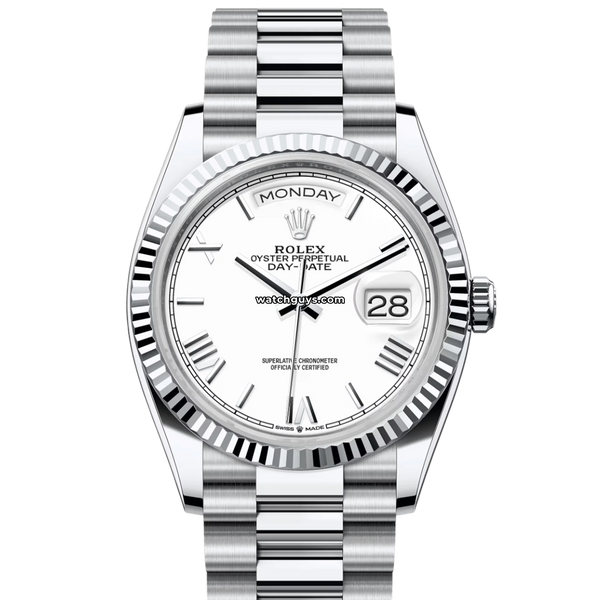 Rolex Day-Date 128236 Platinum White Roman President $69,395.00
-
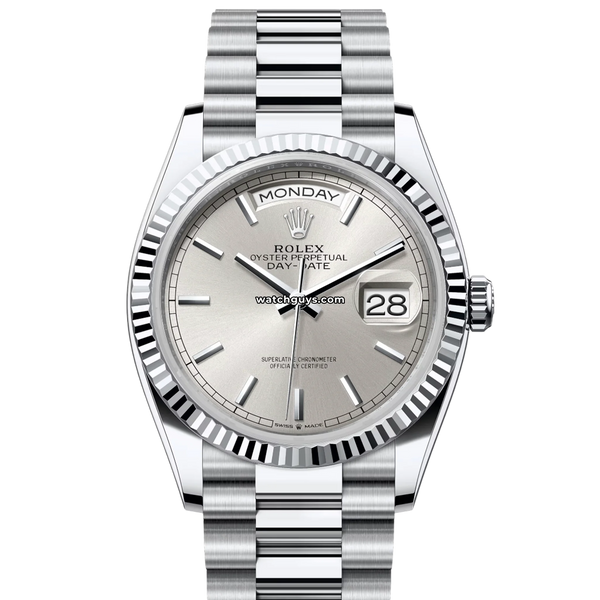 Rolex Day-Date 128236 Platinum Silver Index President $68,895.00
-
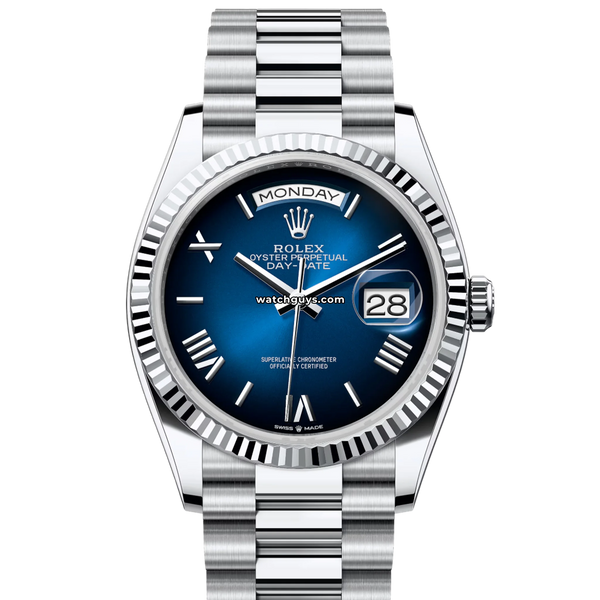 Rolex Day-Date 128236 Platinum Blue Ombre Roman President $74,495.00
-
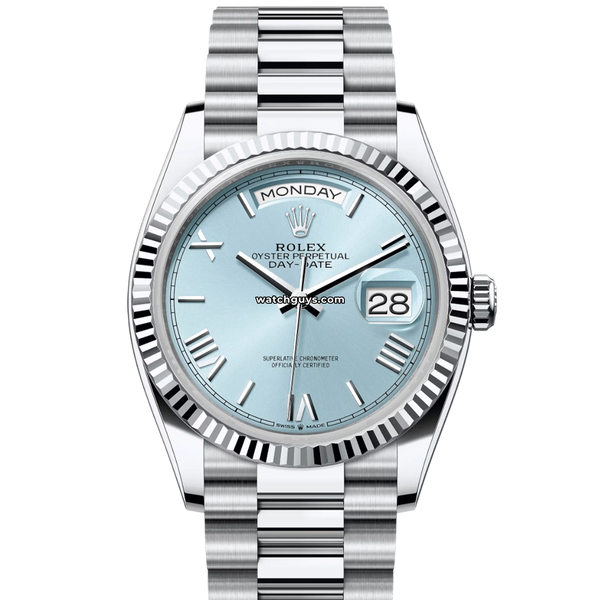 Rolex Day-Date 128236 Platinum Ice Blue Roman President $73,495.00
-
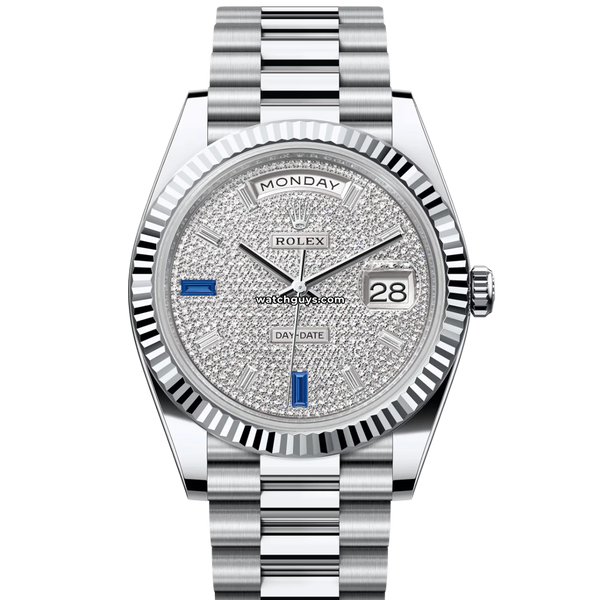 Rolex Day-Date 228236 Platinum Diamond Paved President $122,395.00
-
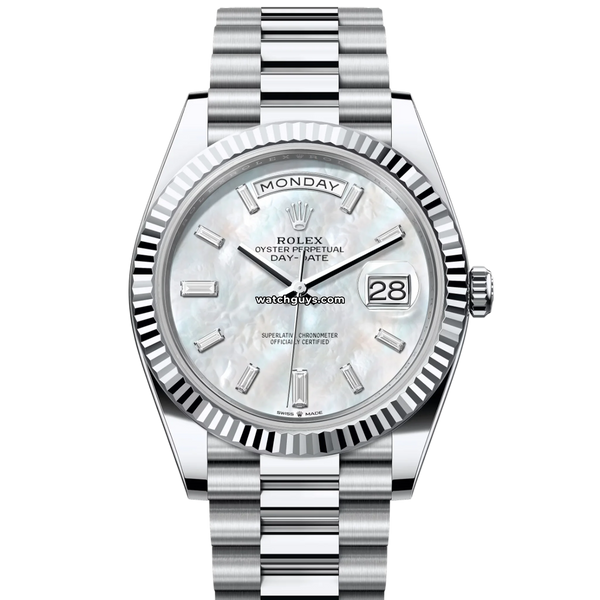 Rolex Day-Date 228236 Platinum Mother of Pearl Diamond President $105,995.00
-
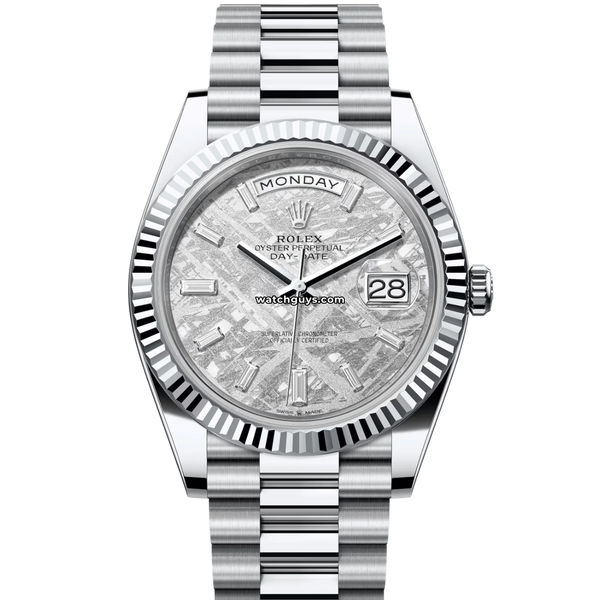 Rolex Day-Date 228236 Platinum Meteorite Diamond President $97,495.00
-
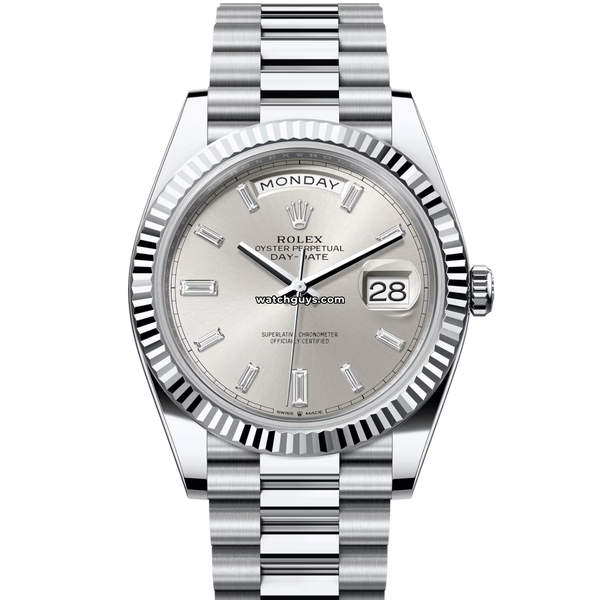 Rolex Day-Date 228236 Platinum Silver Diamond President $85,695.00
-
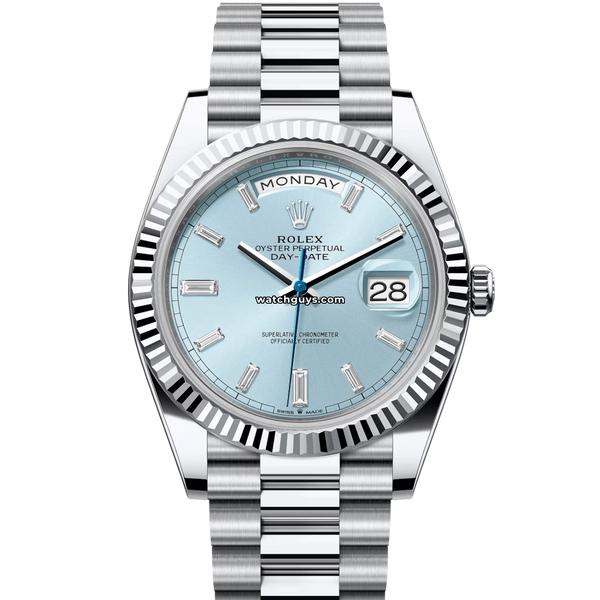 Rolex Day-Date 228236 Platinum Ice Blue Diamond President $86,695.00
-
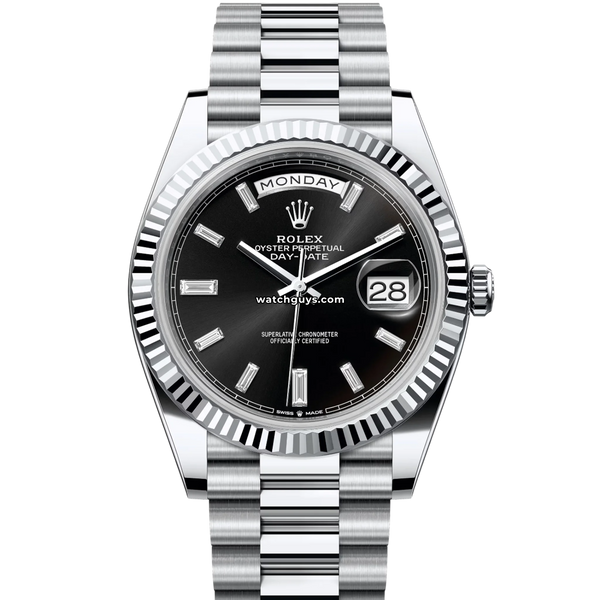 Rolex Day-Date 228236 Platinum Black Diamond President $85,695.00
-
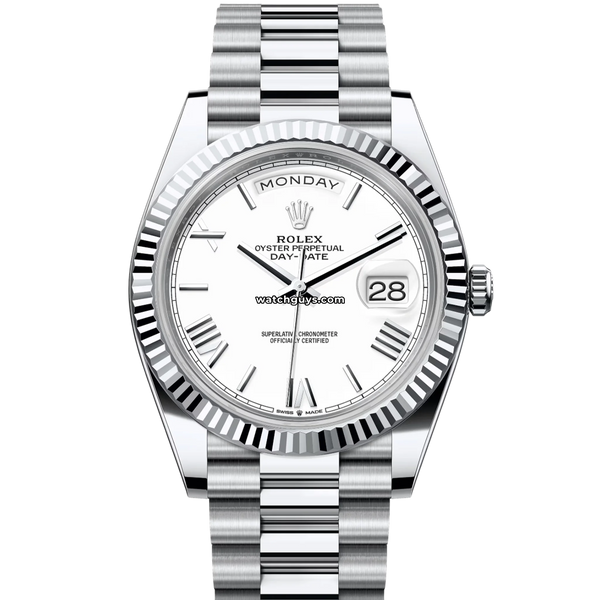 Rolex Day-Date 228236 Platinum White Roman President $75,495.00
-
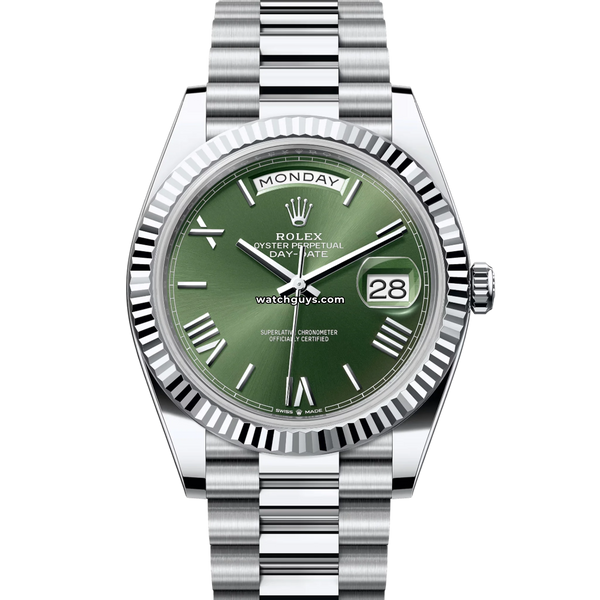 Rolex Day-Date 228236 Platinum Green Roman President $75,495.00
-
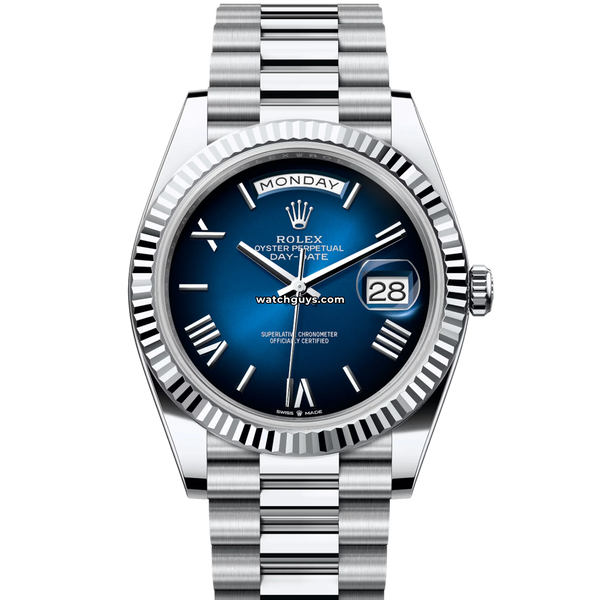 Rolex Day-Date 228236 Platinum Blue Ombre Roman President $78,495.00
-
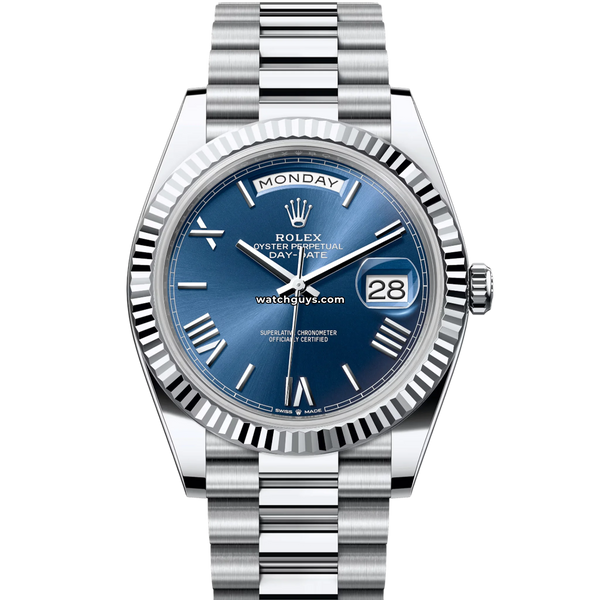 Rolex Day-Date 228236 Platinum Blue Roman President $75,495.00
-
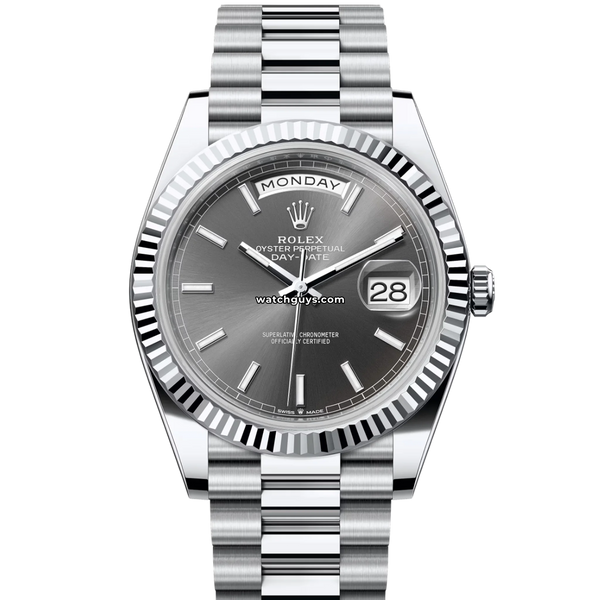 Rolex Day-Date 228236 Platinum Slate Index President $75,495.00
Buying Advice
About the Platinum Rolex Day-Date
Platinum sits at the top of the Day-Date collection and is the only one of the four metals that changes how the watch is built rather than just how it looks. It is denser, rarer, purer, and more expensive than any gold in the range, it wears a smooth bezel where the others wear fluted, and it holds exclusive rights to the ice blue dial. WatchGuys carries pre-owned and unworn platinum examples in 36mm, 40mm, and the discontinued 41mm generation, all backed by the WatchGuys 2 Year Warranty. To weigh it against the three golds, see the full Rolex Day-Date collection or the wider Rolex watches inventory.
What 950 Platinum Actually Means
Rolex uses platinum 950, meaning 95 percent pure platinum with the balance made up of ruthenium for hardness. That purity figure is the first thing worth sitting with, because 18k gold is only 75 percent precious metal. A platinum Day-Date therefore contains a materially higher proportion of its namesake metal than any gold reference in the collection, and platinum itself is roughly thirty times rarer in the earth's crust than gold. It is also hypoallergenic and chemically inert, so it will not react with skin or tarnish under any conditions. Rolex casts and machines it in its own foundry, and platinum is significantly harder to work than gold, which is one of the reasons the finished pieces command the premiums they do. Browse the metal across the wider catalogue in our platinum Rolex collection.
Platinum Rolex Day-Date References by Generation
Current production covers two sizes. The 40mm Rolex Day-Date 228206 is the flagship, running Caliber 3255 with a 70-hour power reserve and pairing its smooth platinum bezel with the ice blue dial. The 36mm counterpart is the Rolex Day-Date 128236, which is the notable exception in this category because it wears a fluted platinum bezel rather than a smooth one. The previous 36mm generation is the smooth-bezel Rolex Day-Date 118206 on Caliber 3155, still the most accessible way into platinum. The 41mm Rolex Day-Date 218206 comes from the Day-Date II run between 2008 and 2015 and is the rarest standard platinum configuration by production volume. Gem-set options include the diamond-bezel Rolex Day-Date 118346 and Rolex Day-Date 118366 in 36mm, and at the summit of the entire Day-Date range, the baguette-set 40mm Rolex Day-Date 228396TBR.
Why the Ice Blue Dial Is Platinum Only
Rolex reserves the ice blue dial for platinum, and it functions as a code. Because platinum and white gold are nearly impossible to distinguish across a room, Rolex needed a signal that identifies the more expensive metal at a glance to anyone who knows what they are looking at. The pale, cold blue does that job and does nothing else, which is precisely why it has become the most recognisable single detail in the modern Day-Date line. Buyers regularly search for an ice blue dial on white gold and find nothing, because it has never existed. If the dial is what drew you here, platinum is the only route to it. See every model it appears on in our ice blue Rolex collection, and if the cost is the obstacle, the Rolex Day-Date White Gold in slate or silver is the closest visual substitute at a lower entry point.
Smooth Bezel, and the One Fluted Exception
Across most of the collection, platinum wears a smooth polished bezel while the golds wear fluted. That was a deliberate design decision: fluting was originally introduced to grip and screw down the bezel, and later became decorative, but on platinum Rolex chose to let an unbroken polished surface carry the metal's cool lustre instead. The result reads as more architectural and considerably more discreet, which is part of the appeal. The exception is the 36mm 128236, which introduced a fluted platinum bezel and gave buyers the option of the traditional President silhouette in the top metal. For the two looks across other models, see our Rolex smooth bezel and Rolex fluted bezel collections.
Weight, Scratches, and How Platinum Ages
A 40mm platinum Day-Date on its President bracelet runs to roughly 250 grams, against about 200 for yellow gold and 155 for a steel sports Rolex. That is the heaviest wrist presence Rolex produces in this size, and it is the first thing every buyer comments on. Platinum also ages differently from gold in a way worth understanding before you buy. When gold is scratched, metal is removed. When platinum is scratched, the metal displaces rather than sheds, so material is pushed aside instead of lost. Over years this builds a soft satin patina that many collectors prefer to factory polish, and it means a platinum case can be refinished repeatedly without losing meaningful mass or softening its lug definition. Practically, expect a platinum Day-Date to mark more visibly than gold in the short term and to survive far better over decades.
How to Tell Platinum From White Gold
The two look almost identical in photographs, which causes real confusion at this price level. The bezel is the fastest tell on most references, since platinum is smooth and white gold is fluted, though the 128236 breaks that rule. Weight is the definitive check, as platinum is around a third heavier than 18k white gold and unmistakable in the hand. Beyond that, look for the ice blue dial, which only ever appears on platinum, and check the case hallmarks and the reference number, where a final digit of 6 indicates platinum and 9 indicates white gold. Colour is the least reliable signal of the four, as platinum reads very slightly cooler and greyer than white gold but not reliably enough to judge from an image.
Platinum Rolex Day-Date Price
Platinum is the most expensive Day-Date metal by a clear margin. The 36mm 118206 generally starts around $32,000 to $48,000 and is the entry point into the category. The 41mm 218206 typically trades between $42,000 and $58,000, helped by its short production run. Current 36mm 128236 examples generally land around $48,000 to $68,000, and the 40mm 228206 from about $65,000 to $90,000 depending on dial and condition. Diamond-bezel references such as the 118346 and 118366 run from roughly $60,000 to $100,000, and the baguette-set 228396TBR sits well past $150,000 and can exceed $250,000 in the right configuration. Everything in this collection falls into our Rolex watches over $20,000 segment, and much of it into the highest tier of Rolex production overall.
Platinum vs. Yellow Gold, White Gold, and Everose
Platinum is the connoisseur's choice and the one that costs the most to say the least. Rolex Day-Date Yellow Gold is the archetype, the configuration the Rolex President nickname most directly evokes, and it holds the deepest resale market of the four. White gold is the value play, discreet and consistently trading below yellow. Rolex Day-Date Rose Gold in Everose is the most contemporary, warmer on the wrist and paired with chocolate and ombre dials developed specifically for it. Platinum sits above all three on price, weight, purity, and scarcity, and it is the only one with the ice blue dial. The honest trade-off is liquidity: the buyer pool at $65,000 and up is smaller than at $30,000, so platinum takes longer to sell even though it holds its percentage well. If you are buying to keep, it is the most watch in the collection. Compare cool-toned dials in our grey dial Rolex and Rolex meteorite dial watches collections.
Trusted Dealer
Why Buy a Platinum Rolex Day-Date From WatchGuys
Platinum Day-Dates run from around $32,000 for a 118206 to well past $250,000 for baguette-set configurations. These are among the highest-value pieces Rolex produces, and because platinum is visually near-identical to white gold, this is the category where misrepresentation carries the largest financial consequence. Every pre-owned and unworn platinum Rolex Day-Date for sale at WatchGuys is authenticated in house by our watchmakers before it is listed.
Authenticity Guaranteed
Multi-point authentication by certified watchmakers covering case, bezel, dial originality, President bracelet, and movement, whether that is Caliber 3255, 3156, or 3155 depending on generation.
View Authenticity Guarantee Policy2-Year Warranty
Every watch ships with the WatchGuys 2 Year Warranty on the movement. A 2008 118206 is covered on the same terms as a current-production 228206.
View WatchGuys Warranty PolicyOvernight Shipping
Fully insured overnight shipping on every order, insured to declared value and shipped from our downtown Los Angeles showroom.
View Shipping PolicyBuyer Protection
Full refund if a watch is faulty or differs from its listing. At platinum price points that protection matters more than anywhere else in the Day-Date range, and it runs from the moment you order through delivery and inspection.
View Buyer Protection Policy950 Platinum Verification
We verify metal purity, case and bracelet weight against known factory figures, and hallmark stamps, and confirm the reference number is a platinum suffix rather than white gold. Weight is decisive here, because platinum runs roughly a third heavier than 18k white gold and no visual inspection substitutes for it.
Ice Blue Dial and Bezel Confirmation
The ice blue dial carries a significant premium and appears only on platinum, so we confirm dial originality and factory finish on every example. We also verify bezel type against the reference, since most platinum Day-Dates wear a smooth bezel and only the 128236 is factory fluted.
Common Questions
Platinum Rolex Day-Date FAQ
-
Current production is the 40mm 228206 with its smooth bezel and ice blue dial, and the 36mm 128236, which is the exception in the range because it wears a fluted platinum bezel. The previous 36mm generation is the smooth-bezel 118206, and the 41mm 218206 comes from the Day-Date II run between 2008 and 2015. Gem-set options include the diamond-bezel 118346 and 118366 in 36mm and the baguette-set 228396TBR at the top of the entire Day-Date range.
-
The 36mm 118206 generally starts around $32,000 to $48,000 and is the entry point. The 41mm 218206 typically trades between $42,000 and $58,000. Current 36mm 128236 examples land around $48,000 to $68,000, and the 40mm 228206 from about $65,000 to $90,000 depending on dial and condition. Diamond-bezel references such as the 118346 and 118366 run from roughly $60,000 to $100,000, and the baguette-set 228396TBR sits well past $150,000.
-
Rolex uses it as a code. Platinum and white gold are nearly impossible to tell apart at a distance, so Rolex reserved a pale, cold blue dial as the signal that identifies the more expensive metal to anyone who knows what it means. It serves no other purpose, which is exactly why it has become the most recognisable detail in the modern Day-Date line. The dial has never been offered on white gold, so if it is what you want, platinum is the only route to it.
-
The bezel is the fastest tell on most references, since platinum is smooth and white gold is fluted, though the 128236 breaks that rule with a fluted platinum bezel. Weight is definitive, as platinum runs roughly a third heavier than 18k white gold and is unmistakable in the hand. The ice blue dial only ever appears on platinum. The reference number also settles it, since a final digit of 6 indicates platinum and 9 indicates white gold. Colour alone is unreliable.
-
It marks more visibly, but it loses less. When gold is scratched, metal is removed. When platinum is scratched, the metal displaces rather than sheds, so material is pushed aside instead of lost. Over years this builds a soft satin patina that many collectors prefer to factory polish, and it means a platinum case can be refinished repeatedly without losing meaningful mass or softening its lug definition. Expect more visible marking in the short term and considerably better survival over decades.
-
A 40mm platinum Day-Date on its President bracelet runs to roughly 250 grams, against about 200 grams for the yellow gold equivalent and around 155 for a steel sports Rolex. The 36mm is proportionally lighter but still the heaviest watch in its size class. This is the single most commented-on characteristic of the model, and it is worth handling one before committing, since wrist presence at this weight is a genuine preference rather than something everyone enjoys.
Ready to Find Your Platinum Rolex Day-Date?
Our team is available to help you choose between 36mm and 40mm, compare smooth and fluted platinum bezels, weigh platinum against white gold if budget is a factor, and answer any questions about the ice blue dial or platinum ownership.
Speak To a Representative





Browse More
Platinum Day-Date References
Gem-Set Platinum Day-Date
Day-Date By Size
Other Day-Date Materials
Platinum Dial Options
Bezels & Bracelets
More Platinum Rolex
Related Dress Watch Families
Editorial & Market
By Price & Condition
